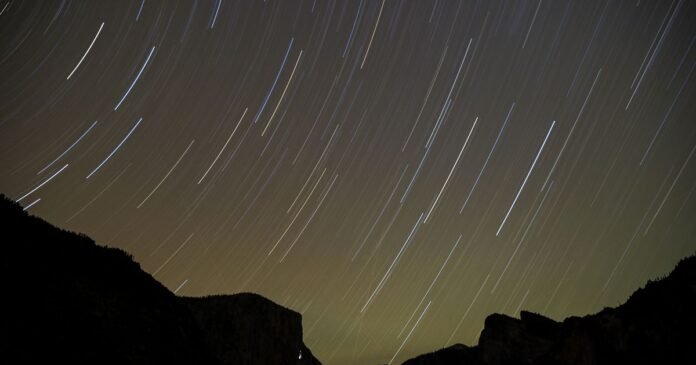

As we approach the end of 2025, skywatchers are gearing up for the final opportunity to witness a stunning meteor shower this year. The Ursid meteor shower, a regular celestial event where meteors burn up in the Earth’s atmosphere, is known for its captivating display around this time annually. Observers are currently in the prime viewing window for this event, making it a timely chance to catch a glimpse before it fades away.
Scheduled to be active from December 17 to December 26, with its peak on December 22, as reported by Royal Museums Greenwich, the Ursids typically produce about ten meteors per hour at their peak, creating a special moment for those lucky enough to witness them streaking across the night sky.
For those interested in observing the shower, patience is key as the appearance of meteors is unpredictable. Optimal viewing conditions involve escaping light pollution from urban areas, as cities can obscure the visibility of meteors, diminishing the spectacle compared to viewing from more remote locations.
Fortunately, the timing of the Ursid meteor shower coincides with the winter solstice, providing ample hours of darkness for sky gazers. This year, the shower’s peak will coincide with a thin waxing crescent Moon setting early in the evening, resulting in darker skies for enhanced visibility.
Named after the Ursa Minor constellation, the Ursids appear to originate from this point, but the best viewing strategy is to look 30 degrees away from Ursa Minor. The ideal time to observe the meteor shower is during the late night hours, between midnight and dawn.
To optimize the chances of spotting a meteor, it is advisable to let your eyes adjust to the darkness for at least 30 minutes, avoid bright lights or screens, and scan the entire sky from a wide-open space. While the Ursids may not be as grand as the Geminids, there have been instances of sporadic bursts of over 100 meteors per hour illuminating the night sky. These meteors originate from the 8P/Tuttle comet, discovered in 1790 by Pierre Mechain in Paris.
The comet’s orbit brings it as close to the sun as Earth’s orbit and as far as the orbit of Saturn, with its path intersecting Earth’s orbit, allowing for intercepted material to descend from above. Although the comet’s last visit to the inner solar system was in August 2021, it is not directly related to the Ursid meteor shower.