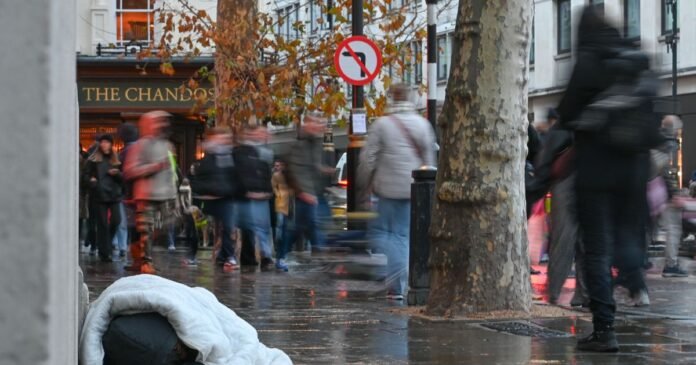

Ministers have made a commitment to reduce the number of individuals compelled to spend nights on the streets by half and eliminate the distressing situation of families being stuck in B&Bs. This initiative is part of a new comprehensive plan to address homelessness, which was released today and is supported by £3.5 billion in funding. The National Plan to End Homelessness outlines three primary goals to be achieved by the conclusion of this parliamentary term – cutting the number of long-term rough sleepers, putting an end to the improper use of B&Bs for families, and preventing more households from experiencing homelessness in the first instance.
A specific target within the plan aims to decrease the number of ex-prisoners who find themselves homeless on their initial night out of incarceration and to ensure that no eligible individual is discharged onto the streets following a hospital stay. Recent revelations from the Daily Mirror indicated that nearly double the number of women are sleeping rough compared to official statistics.
As the holiday season approaches, the government has highlighted the harsh reality faced by many individuals dealing with homelessness, whether it be people sleeping on the streets or children enduring hardships in temporary accommodations. The strategy also mentions a commitment from the prior week’s child poverty strategy to put an end to the improper utilization of B&Bs for families.
Recent data revealed that by the end of June, there were 2,070 households in England with children residing in this kind of temporary housing beyond the six-week limit. Housing Secretary Steve Reed emphasized the importance of addressing homelessness, stating that stability for families, safe environments for children, and the dignity of a home are fundamental rights.
The plan is supported by an additional £37 million in funding to enhance support and services from voluntary, community, and faith organizations, which are deemed essential in addressing this crisis. Local authorities will receive a boost of £950 million to enhance the availability of high-quality temporary housing, while £30 million will be allocated to prevent the use of substandard emergency accommodations.
Homelessness minister Alison McGovern emphasized the importance of collaboration among government bodies, local leaders, charities, and communities to proactively prevent homelessness and provide swift and effective support during crises. Housing charities have acknowledged positive aspects of the strategy but have called for further action, including unfreezing housing benefits and a commitment to building 90,000 new social rent homes annually for a decade.
In response to the strategy, Shelter praised the government for recognizing the severity of the issue but stressed the urgent need to transition individuals currently in temporary housing or on the streets into secure homes. The charity emphasized the necessity of unfreezing housing benefits and constructing new social rent homes to effectively combat homelessness.