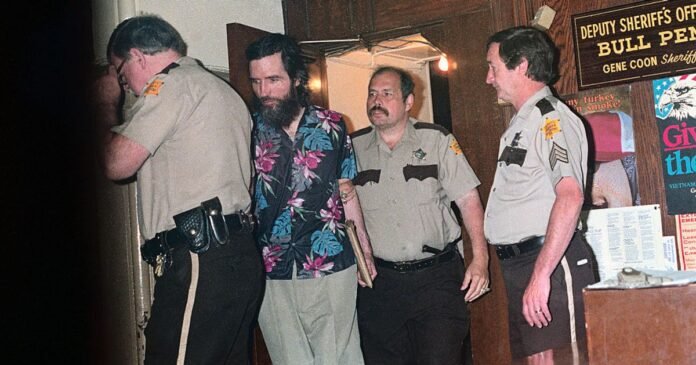

A widely known movie, The Silence of the Lambs, has left a lasting impact on millions, introducing the chilling character of Hannibal Lecter to the public consciousness. However, what many may not realize is that the film’s unsettling portrayal of a kidnapper, rapist, and murderer bears striking similarities to a real-life criminal infamous for heinous acts of dismemberment and cannibalism.
The film, released in 1991, depicts the character Jame “Buffalo Bill” Gumb holding a victim captive in a basement pit, mirroring the actions of Gary Heidnik, a convicted murderer who imprisoned and tortured six women in a self-made dungeon in his Philadelphia home. Heidnik’s shocking crimes included cooking parts of his victims’ bodies to avoid identification, showcasing a level of calculated cruelty that defied belief.
Neighbors recall the putrid stench emanating from Heidnik’s residence, with one neighbor recounting futile attempts to address the foul odor with the perpetrator dismissing concerns as mere cooking smells. Law enforcement encounters with Heidnik were similarly evasive, with officers initially overlooking the signs of a gruesome reality hidden within the house.
The harrowing discovery unfolded when one of Heidnik’s captives managed to escape, leading authorities to the horrific scene in the basement where three women remained chained in a pit, while two others had tragically met their demise. Shockingly, reports later revealed that suspicions of women being held captive in Heidnik’s basement had circulated prior to his arrest but were not acted upon.
Heidnik’s reign of terror commenced in 1986, marked by a series of abductions and brutal assaults on young women chained in his basement. Survivors recounted a nightmarish existence of abuse, starvation, and forced violence perpetrated by Heidnik, who maintained control through fear and brutality.
Despite attempts to argue his insanity at trial, Heidnik’s wealth and calculated actions led to his conviction on multiple charges, including first-degree murder, kidnapping, and rape. He was ultimately sentenced to death and executed in 1999, marking the end of a dark chapter in Pennsylvania’s history.
Witnesses at his execution described Heidnik’s stoic demeanor and lack of remorse, contrasting sharply with the lingering pain and trauma endured by his victims. The sister of one victim expressed a desire for Heidnik to face the consequences of his actions, highlighting the disparity between his relatively swift death and the enduring suffering of those he harmed.
The enigmatic origins of the Buffalo Bill character in The Silence of the Lambs remain a subject of speculation, with author Thomas Harris never officially confirming any direct inspiration for the infamous portrayal.