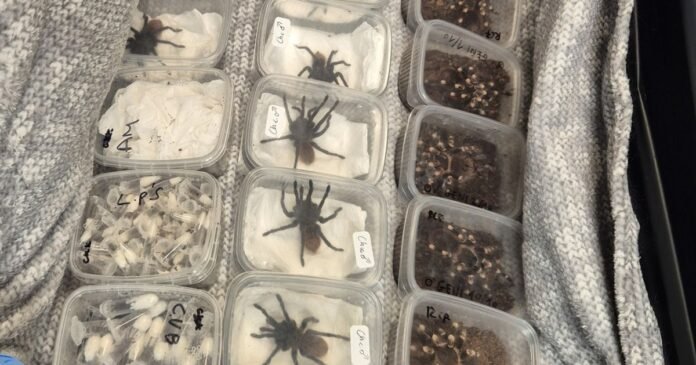

In a recent crackdown by smuggling networks, authorities uncovered tarantulas, live snakes, and lovebirds packed into vehicles. The UK’s Border Force seized over 250 species and endangered wildlife items at various entry points, including 2,000 live tarantulas valued at around £70,000.
During a mission in September and October, officers discovered two rainbow boa constrictors hidden under blankets in a car at Dover. Additionally, more than 100 birds, such as scarlet ibis, green-cheeked conures, and lovebirds, were found crammed into a vehicle, some deceased and others in unsanitary conditions.
The incidence of such cases has risen by 73% in the last two years. Home Office Minister Mike Tapp emphasized the seriousness of wildlife smuggling, describing it as organized crime that fosters corruption, pushes species toward extinction, and compromises border security.
The government highlighted a surge in spider trafficking, indicating that tarantulas can fetch between £50 and £500 on the illegal market. Among the confiscated items were an elephant hair ring from the United States, king cobra balm from Thailand, and a blacktip shark jaw from Australia.
Defra Minister Mary Creagh condemned the illegal wildlife trade as destructive to nature and expressed the government’s commitment to pursuing justice against those involved. The seizures occurred as part of Operation Thunder, a collaborative effort led by Interpol and the World Customs Organization to combat illegal wildlife trafficking.
Law enforcement agencies conducted inspections nationwide during the operation, seizing items such as shark and crocodile meat, ivory carvings, and a tiger claw bottle from sellers lacking proper documentation. Wildlife crime is a lucrative industry, generating up to £17 billion annually globally, ranking it as the fourth largest international crime after firearms, drugs, and human trafficking.
Authorities are increasingly adopting an intelligence-driven strategy, collaborating with international partners to dismantle illicit wildlife trade networks. The confiscated items fall under the protection of the Convention on International Trade in Endangered Species (CITES), currently observing its 50th anniversary. Whenever feasible, seized items will be relocated or utilized for research purposes.