
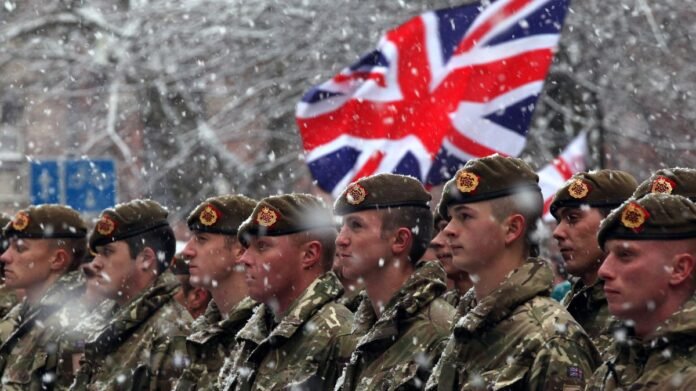

The topic of national conscription has historically been complex, but with increasing global tensions, it has become a pressing issue that cannot be ignored.
Starting from March, individuals under 25 in the UK will have access to a new military gap year program designed to enhance army recruitment and develop crucial life skills amid ongoing concerns related to Russia.
Participants in this initiative will be introduced to military life, gaining transferable skills even if they choose not to enlist. While there is no mandatory commitment to join full-time, those opting for continued service with the Armed Forces will receive additional training for operational deployment.
In past conflicts, British citizens have been called upon to abandon their normal lives and take up arms in defense of their nation. Although such scenarios may seem like tales of the past, the looming threat of widespread conflict feels alarmingly real. Considering the possibility of World War III, one may wonder if their occupation would make them a valuable conscription asset.
While the specifics of modern conscription are uncertain, historical accounts provide valuable lessons. In World War II, essential workers vital to the nation’s infrastructure, such as bakers, farmers, doctors, nurses, and engineers, were exempt from conscription. Those with moral objections to combat, labeled as ‘conscientious objectors,’ contributed to the war effort through non-combat roles after tribunals.
During World War II, males aged 20 to 22 were initially conscripted in 1939, preceding the actual onset of hostilities by six months. Legislation in May 1939 mandated six months of military training for single men aged 20 to 22, with around 240,000 enlisting.
Upon the declaration of war, the conscription age range expanded rapidly to include all men aged 18 to 41. The National Service (Armed Forces) Act of 1939 required males aged 18 to 41 to register for service, with exemptions for those unfit for duty and individuals in critical industries.
By late 1941, women and childless widows aged 20 to 30 were enlisted, extending conscription to