
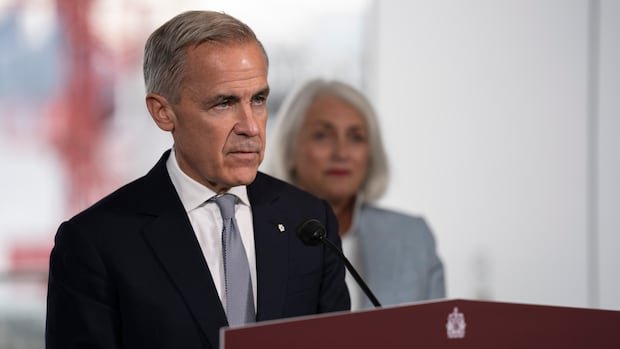

Prime Minister Mark Carney unveiled $1.2 billion in federal funding for marine conservation on Tuesday, coinciding with upcoming decisions on a new West Coast pipeline and the expansion of a key port in Metro Vancouver. Carney stressed the need for enhanced protection measures due to the potential increase in marine traffic and environmental pressures.
The allocated funds will be utilized for various initiatives, such as enhancing the Canadian Coast Guard’s monitoring capabilities, implementing a national near-shore weather forecasting system, and establishing a plan for responding to oil spills involving marine mammals. Furthermore, the plan includes upgrades to search and rescue facilities, improved seabed mapping, and enhanced efforts for fisheries conservation.
The announcement in North Vancouver preceded a pivotal deadline for Ottawa to determine the national interest status of a proposed pipeline connecting Alberta to British Columbia’s southern coast. Carney emphasized the economic benefits of the project, citing job creation and reduced reliance on the United States, while emphasizing a commitment to responsible development practices.
In a separate development, LNG Canada confirmed plans for a Phase 2 expansion in Kitimat, BC, aiming to double its current capacity. Carney also expressed support for the proposed expansion of the Port of Vancouver’s Roberts Bank terminal, highlighting the government’s intention to invest approximately $10 billion in the project to diversify export markets and strengthen national sovereignty.
As maritime activities intensify at the Port of Vancouver, Carney underscored the importance of implementing robust measures to safeguard marine ecosystems, particularly the endangered southern resident killer whales. He outlined strategies to address underwater noise pollution affecting marine life, including a $100 million commitment to monitor and mitigate noise levels across all Canadian coasts.
Additionally, Carney announced funding for Indigenous-led stewardship and restoration efforts in the Lower Fraser River Estuary, along with allocations for enhancing fisheries enforcement and equipping officers with modern tools. The funding package also includes provisions for the Northern Shelf Bioregion Reconciliation Framework Agreement, focusing on collaborative governance, conservation, emergency preparedness, and environmental work in the Great Bear Sea region.
Various organizations, including Coastal First Nations and the Wilderness Committee, have responded to the funding announcement, emphasizing the importance of proactive measures to mitigate risks associated with increased vessel traffic and economic development while also raising concerns about potential environmental impacts and the need for stronger species protection legislation.