
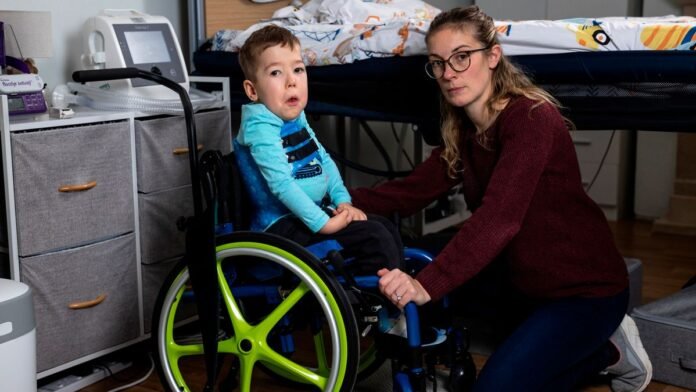

Any parent understands that welcoming a baby can bring unparalleled stress and anxiety. However, parents of children with spinal muscular atrophy (SMA) often share similar experiences of distress. Many are deeply affected by a delayed diagnosis due to NHS shortcomings, leading to feelings of guilt.
Initially, parents leave the hospital with seemingly healthy infants, only to notice worrisome changes over time. Signs such as reduced movement, breathing difficulties, and feeding challenges emerge. Despite expressing concerns to healthcare professionals, they are reassured that everything is fine. As the baby’s condition deteriorates, some are even hospitalized, with a few requiring intensive care for common infections.
Unfortunately, the NHS overlooks key symptoms like limited movement and breathing issues that parents observe. In numerous cases, parents resort to researching symptoms online and diagnosing their child with SMA themselves. Subsequently, doctors and nurses rely on parents’ panicked alerts to confirm the diagnosis through a simple blood test, often after irreversible damage has occurred.
Upon confirmation, parents learn that their baby carries an inherited genetic defect in the SMN1 gene, responsible for maintaining nerve cell health. Without this gene, motor neurons perish, leading to muscle atrophy. Fortunately, the baby receives one of three life-saving treatments offered by the NHS, addressing the faulty gene or providing a replacement protein to prevent further muscle degeneration.
Despite the intervention, parents harbor the regret that earlier treatment could have allowed their child to lead a more typical life, rather than one marked by severe disability. They feel let down by the NHS for disregarding their concerns and lacking awareness of SMA.
The SMA community, known for its strong bonds, provides unwavering support to one another. Parents, through their challenging journey, find hope amidst the darkness. Treated children can attend school, form friendships, and bring joy. Although the future remains uncertain due to the recent introduction of treatments, these children represent the first SMA generation with a chance to survive beyond childhood.
In the future, these children may become advocates, shedding light on the delayed screening for SMA in Britain as a national scandal. Public awareness remains limited due to the rarity of the disease, but public figures like pop singer Jesy Nelson, who has children with SMA, have raised awareness of the issue. Health Secretary Wes Streeting is now urging the UK National Screening Committee to include SMA screening in the NHS heel prick test, aligning with practices in other developed nations.
Ultimately, the relentless efforts of SMA parents, who fought to prevent others from facing similar injustices, will drive change and accountability within the healthcare system.