
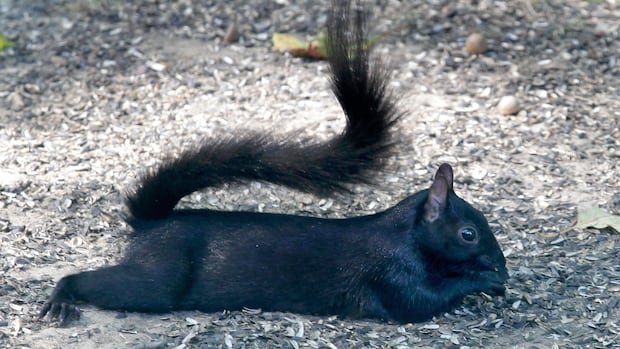

Francis Quang-Hai Dinh spent his first summer at McGill University exploring Montreal’s parks on his bicycle, on a mission to study squirrels. He meticulously observed and documented over 800 grey and black squirrels in nearly 200 green spaces spanning from Mirabel to Saint-Bruno. What began as a simple task for his undergraduate studies evolved into a passionate endeavor to understand how the city’s geography and waterways influence the evolution of these creatures.
Dinh, who is currently pursuing integrative biology at the University of Illinois Urbana-Champaign, became enamored with squirrels, viewing them not just as pests but as wildlife deserving of attention. Due to limited transportation options in suburban areas, he relied on his bike to reach various parks, becoming the sole researcher known to conduct a manual survey of squirrels across the region.
His findings revealed that approximately 12% of squirrels in Montreal are black, with higher concentrations of black squirrels as he ventured northwards. In areas just beyond Laval, he discovered that up to 40% of squirrels exhibited black fur, while the percentages decreased on the islands of Laval and Montreal, and further dropped on the south shore of Montreal. The study attributed this color variation to factors such as temperature and forest canopy density, with black squirrels being more prevalent in cooler regions and areas with denser tree cover.
The research, led by senior author Allison Roth, an assistant professor at the University of Missouri and former McGill postdoctoral fellow, sought to use squirrels as a model to explore how urban environments drive evolutionary changes. The study highlighted the intricate environmental variations within cities, emphasizing Montreal’s unique layout divided by the St. Lawrence River and its tributaries, which create distinct ecological niches influencing genetic adaptations in squirrel populations.
Contrary to previous notions that urbanization solely dictates wildlife changes, the study underscored the multifaceted influence of factors like local vegetation structure, microclimates, and natural barriers on melanism in squirrels. It emphasized the importance of understanding how urbanization affects wildlife evolution and the need for fine-scale analyses to unravel the complexities of these processes.
The research, titled “Fine-scale spatial variation in eastern grey squirrel melanism across a complex urban landscape,” is available online and contributes to a broader ecological discourse on urban wildlife dynamics. Dinh, reflecting on his experience, emphasized the coexistence of wildlife and urban development, emphasizing the resilience of nature amidst human modifications.