
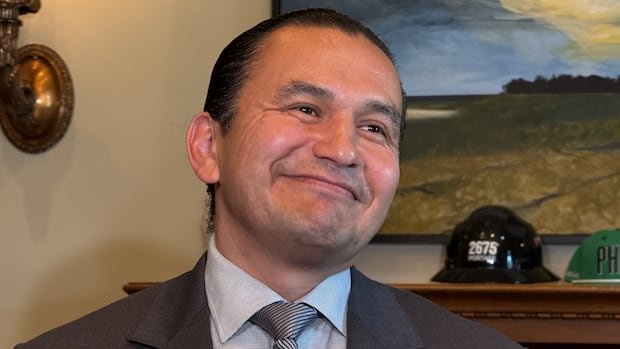

Manitoba’s leader expressed a hesitant willingness to reintroduce American liquor as part of a potential trade agreement, suggesting consumers avoid purchasing it. Discussions between Canadian and U.S. officials are ongoing to finalize a deal aimed at preventing new U.S. tariffs on approximately $30 billion worth of Canadian goods. Prime Minister Mark Carney recently engaged with cabinet members and premiers regarding the potential trade agreement.
While Carney urged provinces to return American alcohol to stores, Manitoba has not yet agreed to this. Premier Kinew emphasized that if U.S. products are restocked in Liquor Marts as part of the deal, Canadians have the choice to refrain from buying them and opt for Canadian alternatives. Kinew conveyed this message during a news conference, highlighting a stance against President Donald Trump’s trade policies.
Manitoba initially removed millions of dollars’ worth of U.S.-made alcohol in 2025 as a response to U.S. tariffs imposed on Canadian goods not in line with the Canada-U.S.-Mexico trade agreement. The province saw a surge in demand for American liquor during a limited release in December, with proceeds from sales directed to charitable causes. American wines and liqueurs nearing expiration were also sold in May, but Manitobans largely favored local options, leading to significant sales growth at Liquor Marts.
In contrast to Manitoba, other Prairie provinces swiftly reinstated U.S. alcohol on store shelves. Alberta lifted the ban on American liquor three months after initially removing it, emphasizing a commitment to fair trade. Saskatchewan briefly implemented a ban but later reversed the decision.
Carney encouraged premiers not to exclude the U.S. from procurement policies, prompting Manitoba to prioritize Canadian or non-American sources since the onset of the trade dispute. This approach significantly reduced the province’s spending on American firms. The premier noted that support for local workers, such as those at the Gerdau steel mill, will play a crucial role in Manitoba’s decision on the trade terms.
Kinew criticized Trump’s trade tactics, expressing skepticism about the longevity of any deal reached. He emphasized the importance of standing firm for a favorable agreement and highlighted Canada’s advantageous position in negotiations with the U.S. The premier also underscored the potential for revisiting the removal of U.S. liquor from shelves if necessary.
In response to Kinew’s statements, a California winemaker raised concerns about the impact of the trade dispute on U.S. businesses like his vineyard. The winemaker highlighted the challenges faced due to decreased exports and uncertain trade policies. Despite differing opinions, consumers in Manitoba expressed support for local products over American imports, reflecting a broader shift in consumer preferences.
Overall, the ongoing negotiations between Canada and the U.S. are shaping the trade landscape, with stakeholders closely monitoring developments and anticipating a favorable outcome for both countries.