

At twilight, during a recent solar eclipse in northern France, a crowd gathered at a highway bus stop, carrying bright orange life jackets. This group, including women and young children, had been camping in nearby woods for months, awaiting a chance to board a boat to cross the English Channel. Despite facing obstacles from police, migrants in the region have been attempting these crossings with larger and riskier boats, reflecting broader trends in European migration.
Political figures in the UK, like Nigel Farage, have called for tougher measures to deter Channel crossings, such as Royal Navy interventions. However, operational feasibility challenges have been raised regarding such proposals. The UK has increased funding for border security, leading to a more fortified Calais region with heightened police presence and crackdowns on departure points.
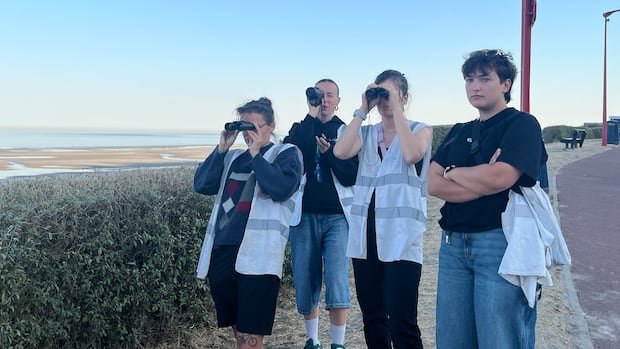
The number of asylum seekers crossing the Channel has decreased compared to previous years, but the risks have escalated as migrants seek alternative and perilous routes. Humanitarian efforts by citizen groups, like Calais Appeal and Utopia 56, aim to support stranded migrants and provide assistance in the face of heightened border controls and dangerous conditions.
A recent incident involving a record number of 230 people on a single boat reaching the UK highlights the growing challenges faced by both migrants and authorities. The use of larger vessels and new tactics by smugglers adds to the complexity of the situation, prompting concerns about the safety and well-being of those attempting the journey.
The narratives of individual migrants, like Mohammed from Gaza, shed light on the personal struggles and motivations behind their perilous journeys. Despite the risks and uncertainties, many migrants, driven by a desire for safety and a better future, continue their attempts to reach the UK, a destination perceived as a place of refuge.
The ongoing migration crisis underscores the need for comprehensive solutions beyond national borders, emphasizing the shared responsibility of governments and international bodies to address the root causes and challenges posed by the evolving migration landscape. As the situation intensifies, collective action and cooperation are essential to manage and navigate the complexities of the migration issue.