
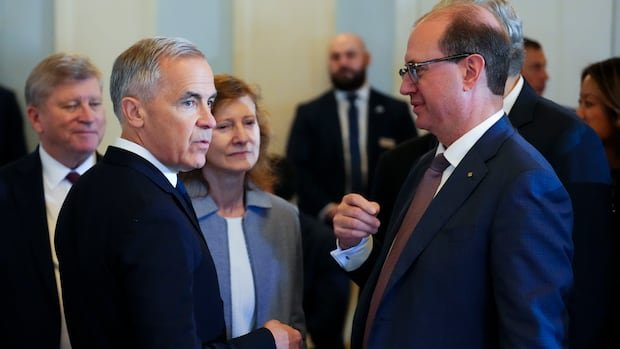

Canada’s envoy to the U.S. emphasized the necessity of reintroducing American alcohol into Canadian markets as a key precondition for finalizing a trade agreement to avert potential tariffs, as per information obtained by CBC News during a video conference on Thursday. Mark Wiseman, in a briefing to around 100 members of the Canada-U.S. trade council, revealed this requirement.
The council, comprising various businesses, industry bodies, and labor associations, was also briefed by a former Canadian lead trade negotiator who expressed reservations about the proposed deal. Meanwhile, Canadian negotiators are engaged in critical talks in Washington with the Trump administration to prevent the imposition of 50% tariffs on Canadian exports, with the deadline set for midnight Friday.
During the discussion, Wiseman outlined a preliminary consensus to avoid the impending tariffs, as reported by three sources familiar with the call. The sources, whose identities CBC News is protecting as they lack authorization to speak publicly, shared that Wiseman mentioned approximately 35 Canadian officials stationed at the Canadian Embassy in Washington working to finalize the agreement’s language.
The potential agreement entails reducing tariffs on steel, aluminum, and automobiles, as well as revising the allocation of dairy import licenses by the government, according to Wiseman. However, concerns were raised by Canada’s former chief trade negotiator, Steve Verheul, about potential downsides of the deal, cautioning against hasty concessions that could undermine Canada’s bargaining power in future negotiations.
Verheul highlighted the risk of Canada ceding leverage prematurely, potentially leading to additional demands from the U.S. He stressed that most American businesses oppose Trump’s tariffs and support the continuation of CUSMA for duty-free trade. Verheul urged Canada to resist accepting sectoral tariffs imposed by the U.S. administration and to prioritize achieving duty-free trade at the upcoming CUSMA review.
Furthermore, industry sources expressed frustration over the lack of consultation by the Canadian government and insufficient briefing of stakeholders compared to the detailed briefings provided to U.S. industry representatives by the Trump administration. The concerns raised during the call by Verheul and others underscore the complexities and challenges faced by Canada in navigating the evolving trade dynamics between the two nations.