
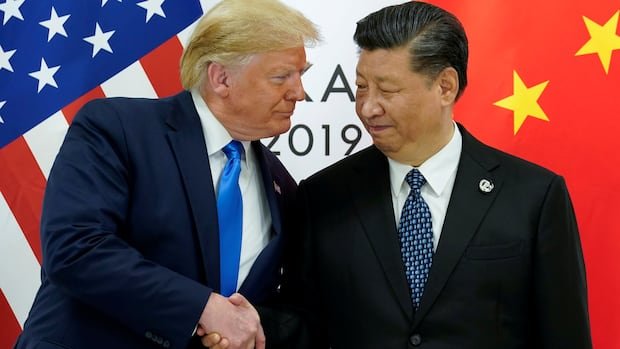

U.S. President Donald Trump welcomed Chinese President Xi Jinping with high praise this week, emphasizing their ongoing efforts to negotiate trade terms and potentially expand their existing agreement to avoid tariffs and maintain a trade truce. Trump has expressed satisfaction with prior trade deals with China and even entertained the idea of Chinese automakers establishing factories in the U.S.
Conversely, Trump and his administration have criticized Canadian Prime Minister Mark Carney for a trade deal allowing the import of 49,000 Chinese electric vehicles with reduced tariffs, while Canada gained tariff reductions on products like canola, peas, lobsters, and crabs from China. This move received disapproval from U.S. officials, with Transportation Secretary Sean Duffy expressing regret over the decision.
Commerce Secretary Howard Lutnick went further, accusing Canada of neglecting the U.S. market in favor of China. The U.S. officials’ stance has raised concerns about the double standards in U.S. trade policy, as highlighted by Jia Wang, a senior fellow at the China Institute at the University of Alberta.
Trade between Canada and China has been on the rise as a response to U.S. tariffs, with American importers reducing their purchases from China. However, Canada would need a significant increase in trade volume to match the U.S.’s import levels from China. Senator Rick Scott warned Canada about the risks of deepening trade ties with China, suggesting potential consequences for Canada’s future.
Critics have pointed out the hypocrisy in Trump’s approach, favoring economic engagement with China while criticizing Canada for similar actions. Mark Manger, a professor at the Munk School of Global Affairs & Public Policy, emphasized the need for a nuanced understanding of international trade dynamics, especially in light of the shifting global economic landscape.
As China continues to assert its economic influence, observers like Manger and Wang stress the importance for Canada to navigate relations with both the U.S. and China strategically and diplomatically. They underscore the necessity for Canada to engage with these economic powerhouses while exercising prudent leadership and decision-making to secure its economic interests on the global stage.