
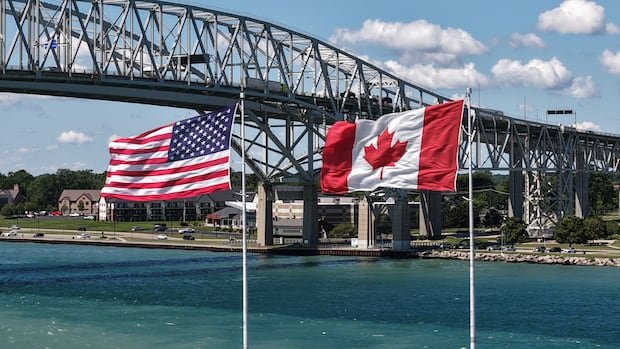

The recent actions by the White House escalated tensions in the ongoing Canada-U.S. trade war by imposing bans on Canadian dairy, motorcycles, and certain alcohol imports. Additionally, a fresh round of 50 per cent tariffs was introduced on various products, raising concerns about the potential effects on the Canadian economy.
Economists have analyzed the situation and concluded that the overall impact on the Canadian economy might be limited. However, specific industries could still face challenges, causing uncertainty among business owners. The White House’s retaliatory measures included bans and increased tariffs on Canadian goods, affecting approximately $3 billion worth of exports, while removing tariffs on goods valued at around $2 billion. Despite these figures, considering that Canada exported over $527 billion worth of goods to the U.S. in 2025, the difference in impact is relatively marginal.
The bans on alcohol, dairy, and motorcycles are expected to have minimal effects, as the quantities of dairy and motorcycles exported to the U.S. are relatively low. Alcohol exports, although higher at $550 million, would only be partially impacted by the bans. According to analysts, the recent actions by the U.S. administration are seen as more of a face-saving measure rather than having substantial economic implications.
Experts suggest that the rising oil prices due to escalating tensions in the Middle East pose a greater economic risk than the new U.S. tariffs. While the tariffs are estimated to affect around $2 billion worth of items, the overall impact may not significantly alter the economic landscape.
Although certain industries and regions may feel the brunt of the tariffs, the broader economy may remain relatively unaffected. The ban on alcohol products, for example, could hit the industry, but with existing 50 per cent tariffs in place, the additional ban might not substantially impact producers. Business owners are advised to adapt to the changing trade environment and explore alternative markets to mitigate potential losses.
The real consequences of the trade war may not be in the direct economic impact but in the uncertainty it creates for businesses on both sides of the border. The swift implementation of some measures leaves little time for adjustment, adding to the challenges faced by businesses navigating the evolving trade landscape.