
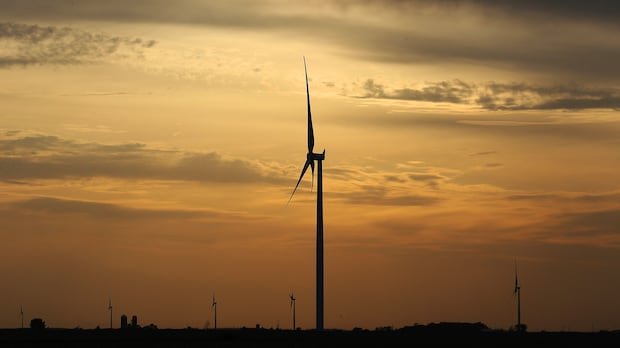

EverWind Fuels, a company aiming to produce green hydrogen, has been instructed to provide additional information to the province before proceeding with a proposed wind farm in Guysborough County. Nova Scotia Environment Minister Tim Halman issued a decision on the Harbour Hills Wind Project, highlighting the company’s failure to conduct essential baseline field surveys for a 6,000-hectare area where 30 wind turbines are planned.
According to Minister Halman, the surveys must address various wildlife and plant species within a year, including moose, bats, birds, turtles, plants, and lichen. In response, EverWind’s spokesperson, Claire Parsons, mentioned that the company is evaluating the minister’s decision while affirming their commitment to collaborating with Nova Scotia Environment and Climate Change to furnish the required information and progress through the environmental assessment process.
The Harbour Hills project, consisting of 107 turbines, is part of EverWind’s proposal for three major wind farms in Guysborough County. Additionally, the company is involved in four smaller projects across other regions of the province. The end goal for EverWind is to utilize wind power to operate a green hydrogen and ammonia production facility in Point Tupper, N.S.
In other developments, one of EverWind’s potential buyers for ammonia, E.ON Group, based in Germany, has decided to deprioritize hydrogen-related projects. Despite this setback, EverWind remains optimistic about the market demand for their product and is continuing discussions with Uniper and other European partners.
Meanwhile, Bear Head Energy, another company looking to establish green hydrogen production in Nova Scotia, has gone silent. The company had received environmental approval for its facility in Point Tupper but has not commenced construction within the specified timeframe. Although Bear Head Energy has not shared any recent updates, the Environment Department has granted an extension for construction until 2027.
David Layzell, a professor emeritus at the University of Calgary specializing in environmentally friendly energy systems, emphasized the necessity of green hydrogen for global decarbonization. Layzell acknowledged the slower-than-expected progress in the hydrogen industry but expressed confidence in the viability of green hydrogen production in Nova Scotia, albeit with a longer timeline.
These developments highlight the evolving landscape of green hydrogen initiatives in Nova Scotia, underscoring the challenges and opportunities associated with transitioning to sustainable energy sources.