
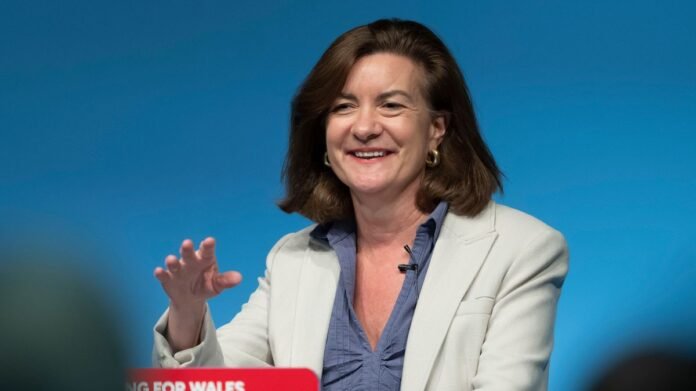

Many individuals in Wales continue to experience challenges that make life more difficult than it should be.
Despite putting in hard work, concerns about upcoming bills persist. Observing the closure of shops in town centers or worrying about the necessity for their children to seek employment outside of Wales are common occurrences. This situation is deemed unjust. As the First Minister, I am committed to confronting this reality with transparency.
Following years of austerity and budget cuts under the Tory government, significant investments are being made into public services. Essential services have been safeguarded to cater to the needs of the populace. However, for numerous families, the pace of improvement is still perceived as insufficient. Hence, it is imperative to persist in efforts that assure families that remaining loyal will yield tangible benefits.
Wales is on the brink of a new era. For the first time in years, there is a genuine opportunity to transition from merely managing imposed Tory cuts to shaping our own destiny. The groundwork laid during 25 years of devolution, such as enhancing skills, infrastructure, and confidence, is beginning to yield positive results.
The interest from investors, previously directed elsewhere, is now focused on Wales. The framework is set for a new wave of employment opportunities across the country. My previous experience in the private sector emphasized the significance of stability, infrastructure, and above all, the well-being of individuals. These are the focal points of my government’s agenda.
Evident progress includes substantial energy initiatives in the north, the establishment of an AI growth zone in the south, advanced manufacturing developments in the east, and the integration of renewables along our western coastline. Since assuming office as First Minister, Wales has attracted £16 billion in business funding following the announcement of hosting the most successful Wales Investment Summit to date. These figures represent more than just statistics; they signify jobs, apprenticeships, and opportunities entering Welsh communities, injecting new vitality and optimism.
However, growth alone is inadequate; it must also be equitable. A fair future entails the assurance of timely access to medical professionals, decentralizing care services, reducing lengthy waiting periods, ensuring safer streets with visible policing, enabling young individuals to receive training, work, and establish a future within Wales, revitalizing town centers, and fostering the preservation and prosperity of Welsh culture and language.
The choices for Wales are becoming clearer. Some parties advocate for “change” without offering feasible governance or funding strategies. Conversely, the Reform party thrives on discontent, proposing cuts and disorder that jeopardize essential services.
While Reform asserts that the entire nation is in disarray, they fail to present concrete solutions beyond criticism of the system. Acknowledging the prevailing inequities, Welsh Labour is taking proactive steps while Reform resorts to blame-shifting.
Welsh Labour adopts a distinct approach, not only in contrast to Reform but also in comparison to counterparts in England. Initiatives such as free prescriptions, free school meals for primary students, ensuring care workers receive the Real Living Wage, and reclaiming control of the railways reflect substantial political decisions, not mere slogans.
This election is not about choosing between change and continuity; it is about sustaining the forward momentum that has steered Wales away from austerity and cuts or risking the progress achieved. With a fresh cohort of candidates and a clear vision, Welsh Labour stands prepared to script the next chapter and construct a just future for Wales collaboratively.