
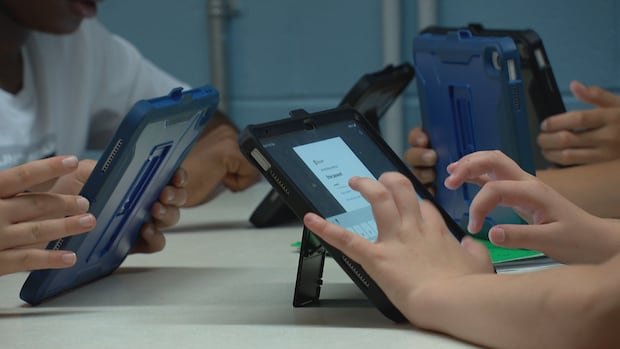

Students at a Moncton middle school recently engaged in interactive activities involving cybersecurity and artificial intelligence. They navigated through a virtual dungeon to escape a dragon, designed visual presentations, worked with tiny robots, and explored colorful screens for a food-related unit. Under the supervision of their teacher, Grade 7 students incorporated artificial intelligence tools into their learning experiences.
New Brunswick schools are embracing artificial intelligence in their curriculum following an update by the Department of Education. This initiative aligns with the Anglophone K-12 curriculum, integrating AI education into classrooms. In contrast, some international school systems, such as Norway and major U.S. school boards, have imposed restrictions on AI use among students.
The curriculum update in New Brunswick aims to enhance digital literacy by incorporating structured AI learning. Educators are encouraged to teach students about AI in age-appropriate ways and foster a critical understanding of the technology. The implementation of AI in classrooms starts with basic digital literacy concepts for younger students, gradually progressing to more complex applications as they advance.
Teachers receive professional development to effectively integrate AI tools into their teaching practices, ensuring students understand how to utilize AI support without compromising their own work. New Brunswick emphasizes the safe and ethical use of AI in schools to develop AI literacy among students.
While the integration of AI continues to evolve in New Brunswick schools, there are concerns about the rapid adoption of technology without proper oversight. Parents and educators are advocating for a cautious approach to AI implementation, emphasizing the need for adequate training and support for educators. There is a push for clear policies and guidance to navigate the complexities of AI in education effectively.
Educational stakeholders are urged to collaborate and share best practices to address the challenges associated with AI in schools comprehensively. The shift towards integrating AI into education requires a systematic approach that considers various factors, including student well-being, cognitive development, and data privacy.