
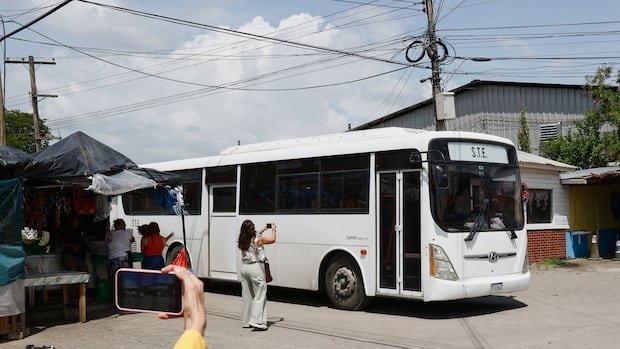

The U.S. has deported around 2,300 Mexicans to Guatemala this year and transferred dozens more to Honduras, as per official records. This marks a departure from the early stages of President Donald Trump’s second term when such deportations were minimal. Historically, only a few Mexicans had been sent to countries other than Mexico due to the principle of non-refoulement, which prohibits returning migrants to nations where their rights could be endangered based on race, religion, or nationality.
The National Migration Institute (INM) of Mexico confirmed that Mexicans have been deported by the Trump administration to Guatemala and Honduras since April, with subsequent transport to southern Mexico. The Mexican government has registered opposition to this practice with U.S. authorities, emphasizing every Mexican’s right to enter the country.
The flow of migrants through Mexico and across the U.S. southern border has caused tensions between the nations. In the current administration, Mexican President Claudia Sheinbaum’s government has protested the deaths of 17 Mexicans in U.S. immigration custody or enforcement operations. When questioned about deporting Mexicans to Central America instead of Mexico, the U.S. Department of Homeland Security cited the administration’s commitment to executing the largest deportation operation in history.
Guatemalan President Bernardo Arévalo disclosed that 2,284 deported Mexicans from the U.S. have been routed through Guatemala as a “transit stopover” before repatriation to Mexico under an agreement with the Mexican government. Similarly, Honduran authorities did not comment, but official documents revealed that 82 Mexicans arrived in San Pedro Sula on flights in August, with 35 more in subsequent days. Another 165 Mexicans were deported to Honduras between May and mid-July, as reported by Third Country Deportation Watch.
Immigration lawyers suggest that the U.S. is employing deportations to third countries as a legal maneuver to indirectly coerce asylum seekers to return to Mexico. This tactic is seen as pressuring the Mexican government to prevent Mexican border crossings. Trump’s agreements with various countries in his second term designate them as “bridge” or destination countries for migrants expelled from the U.S. mainland.
In a separate development, the U.S. initiated deportations to Haiti following a Supreme Court ruling in favor of the Trump administration. The decision affects Haitians and Syrians under the Temporary Protected Status (TPS) program and potentially residents from other countries granted TPS due to crises. Haiti’s National Office of Migration reported the deportation of 161 individuals, including TPS holders who had resided legally in the U.S. since the 2010 earthquake.
Activists have raised concerns about the dangers in Haiti due to rising violence and poverty, with over half the population requiring humanitarian aid. The U.S. State Department advises against travel to Haiti, with a ban on commercial flights to the main airport in Port-au-Prince. In Liberia, deportees from the U.S. arrived, including African and other nationals, with the option to seek asylum in the country. The U.S. State Department reaffirmed its commitment to curbing illegal immigration and strengthening border security.