
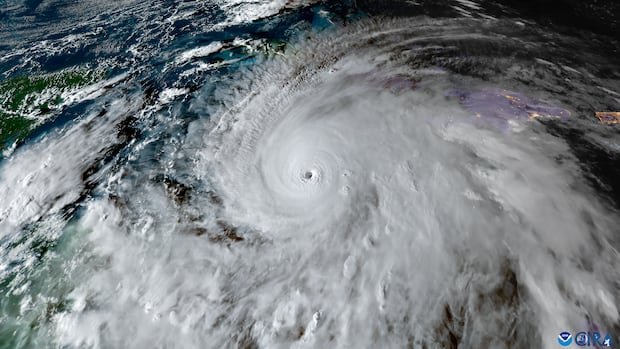

As of the current moment, the Atlantic hurricane season has seen only six named storms, with most being short-lived. The reduced activity has raised questions about the lack of hurricane formation this year.
Phil Klotzbach, a senior research scientist at Colorado State University, attributes the quiet season to the significant El Niño event currently underway. El Niño, a component of the El Niño-Southern Oscillation (ENSO) cycle, affects the central Pacific Ocean’s water and atmospheric winds.
This “super” El Niño is suppressing hurricane activity in the Atlantic due to its strength. El Niño occurs when the central Pacific Ocean’s water temperature rises 0.5 degrees Celsius above average. Contrarily, a La Niña event is indicated by temperatures 0.5 degrees Celsius below average, with global implications.
Forecasts suggest that the ongoing El Niño could become a historic event, with anomalies potentially exceeding previous records. The Climate Prediction Center at NOAA predicts anomalies of 2.6 to 2.7 degrees Celsius, indicating a high probability of a historically strong event.
The Pacific Ocean experiences heightened hurricane activity during El Niño, with 16 named storms so far this season. In contrast, the Atlantic basin nearly witnessed its first hurricane recently when Tropical Storm Fay formed further north than typical hurricane formation areas.
While the Atlantic region has experienced a lack of hurricanes, short-lived tropical storms in the Gulf of Mexico have impacted coastal communities. Despite the current El Niño’s impact on this year’s hurricane season, its effects on the upcoming season remain uncertain.
Klotzbach noted that post-El Niño years typically see warmer Atlantic conditions and no El Niño, potentially influencing future hurricane seasons. The quiet Atlantic season, influenced by the strong El Niño, contrasts with the heightened Pacific hurricane activity, emphasizing the global impact of ENSO events.