
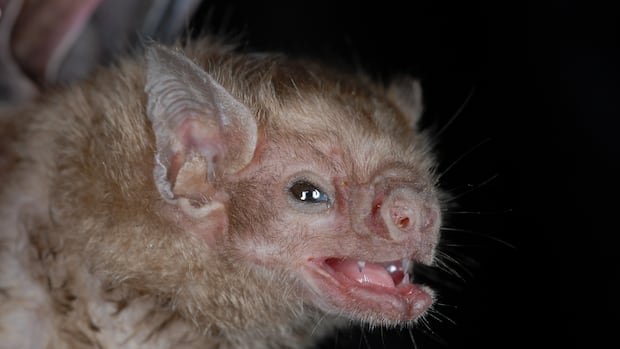

A recent extensive study of bat genomes from all 21 modern bat families, along with comparisons to numerous fossil bats, has reportedly put an end to the debate on the origins of bats and shed light on the characteristics of early bats. The study, published in the journal Nature, suggests that the earliest bats likely evolved in Europe approximately 65 million years ago. Previously, there were discussions among scientists about possible origins in Asia, Africa, or North America, but due to limited fossil evidence, this question remained unanswered.
According to Sonja Vernes, the senior author of the study and director of the Bat1K consortium, bats have been flying across the globe for millions of years, contributing to their widespread distribution. The study utilized advanced computational methods to analyze genomes from 103 bat species, traits, genes, and 44 bat fossils. It revealed that ancient bats with 26 chromosomes emerged around 65 million years ago after the extinction of dinosaurs.
Furthermore, the research uncovered that echolocation developed early in bat evolution. The analysis highlighted that the fossil bat Vielasia, which lived 50 million years ago and exhibited bone structures enabling echolocation, belonged to the oldest branch of the bat family tree. Presently, there are around 1,500 bat species worldwide, making up a significant portion of mammal diversity.
The public availability of the study data has sparked enthusiasm among researchers, such as Vernes, who anticipate leveraging bat genomes to gain insights into human health. The extended lifespan and viral resistance of bats have long intrigued scientists, and studying their genomes could unlock these mysteries, potentially leading to innovative healthcare treatments inspired by bats.
The collaborative effort involved 600 researchers globally, with Burton Lim from the Royal Ontario Museum contributing significantly to the study by supplying samples for genome testing. Lim, an assistant curator of mammals, collected samples predominantly from tropical regions in South America and Southeast Asia. Notably, the study aims to support conservation efforts by identifying genetically less diverse bat families for prioritized preservation.
Overall, the study’s comprehensive genomic data on bats is anticipated to catalyze further research into unique bat characteristics like echolocation and provide a deeper understanding of bat evolution and diversity.