

Welcome to our weekly newsletter focusing on environmental trends and solutions driving us towards a more sustainable world. Anand here, pondering air quality post-pandemic and amidst recurring wildfire smoke incidents. How can we raise awareness about unseen dangers?
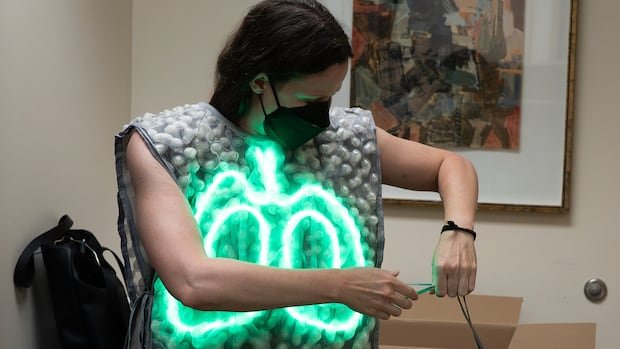
This week’s highlights include the concept of wearing an air-quality alert system, the impact of El Niño, and a unique solar power initiative in the Arctic. Grace Grothaus, a postdoctoral researcher at York University, showcases her AtmoSpheres 01 prototype designed to visually represent air quality conditions. The prototype, resembling a lead apron with illuminated green lungs, detects harmful air pollutants like PM2.5 and black carbon.
The lighting system changes colors based on air quality levels, following the U.S. Environmental Protection Agency’s index. Grothaus emphasizes the importance of making invisible pollutants visible to the public. Michael Pinsky, a London-based visual artist, highlights the role of art in addressing environmental issues through installations like Pollution Pods, which simulate different cities’ air quality.
Meanwhile, in Toronto, Grothaus is developing AirWear, a portable air quality sensor focusing on community engagement. The project aims to empower individuals to monitor air quality in their surroundings. Grothaus emphasizes the significance of combining artistry with community research for effective environmental solutions.
In other news, the Ikayuut solar and energy storage project in Naujaat, Nunavut, signifies a significant step towards renewable energy adoption. The project, a collaboration between various organizations, aims to reduce diesel consumption and promote sustainable energy practices in the community.
As we navigate climate challenges, innovative solutions like wearable air quality sensors and renewable energy projects offer hope for a greener future. Stay tuned for more updates on environmental initiatives and solutions.
For more information, visit the provided source link.