
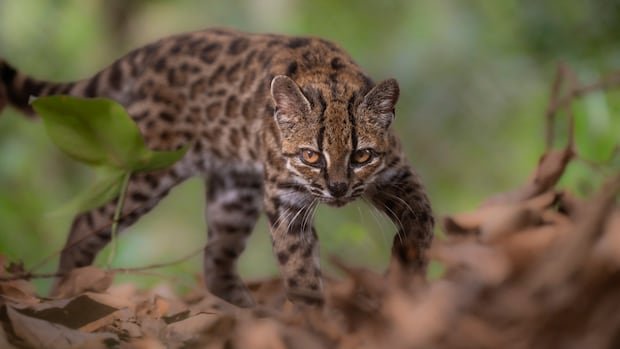

A small wild cat living in Bolivia’s cloud forest has been recognized as a new species, marking the first formal naming of a living cat species in over a century. Known as Tilcayo by locals, this cat belongs to a group of tiger cats found in South America. Discovered in Bolivia’s Yungas forest, it is smaller than the average domestic cat, measuring around 46 centimeters (18 inches) in length and weighing approximately three pounds.
Genetic data was utilized to confirm the cat as a new species, named Leopardus tilcayo while keeping its local name. Described as having light brown fur with irregular rosettes, little is known about its biology and habits. Studies suggest it may consume small rodents and be more active at night.
Tiger cats are cryptic species, challenging to differentiate by appearance alone, according to evolutionary biologist Jonas Lescroart. Previous beliefs considered tiger cats a single species, but genetic studies hinted at multiple species. The research identified five genetically distinct tiger cat species.
The newly discovered cat species has only two known live individuals at present. One of them, a 10-year-old male, now resides in Senda Verde Wildlife Sanctuary after being kept by a local family. DNA analysis from various South American countries revealed the existence of five tiger cat lineages.
The International Union for Conservation of Nature lists tiger cats as two “vulnerable” species with declining populations. The findings have been shared with the IUCN for a comprehensive assessment, potentially leading to the classification of species like Tilcayo as endangered. The Yungas ecosystem, where the new species was found, faces threats from deforestation, fires, and mining, necessitating urgent conservation efforts.
Discovering new species like the Tilcayo cat highlights the importance of conservation and the ongoing risk of species extinction before they are even identified.