
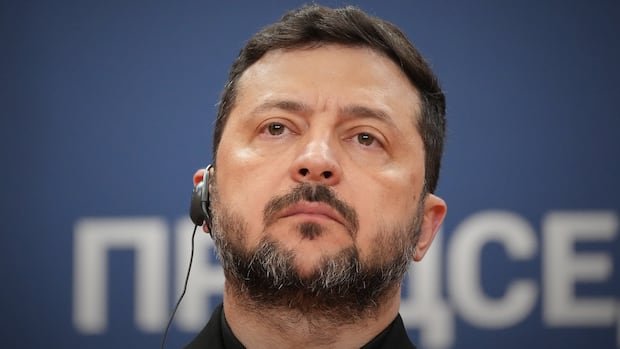

Ukrainian anti-corruption authorities revealed on Wednesday that they are probing high-ranking officials in President Volodymyr Zelenskyy’s administration. This comes after the country’s recently sacked defense minister advocated for national elections amid the ongoing conflict with Russia’s invasion. The investigation, led by Ukraine’s National Anti-Corruption Bureau and the Specialized Anti-Corruption Prosecutor’s Office, aims to uncover a criminal network allegedly overseen by a current and former lawmaker, implicating officials from the presidential office and others. Specific details will be disclosed later. President Zelenskyy, while not commenting publicly on the inquiry, issued a decree removing Iryna Mudra from her role as deputy head of the president’s office.
The scrutiny poses a new challenge to Zelenskyy’s political standing. Previously, his chief of staff Andriy Yermak resigned and was later implicated in a major corruption investigation, marking a significant threat to Zelenskyy’s government. Additionally, Zelenskyy faced backlash over the recent dismissal of Defense Minister Mykhailo Fedorov, a key ally since the 2019 presidential election. Yevhenii Khmara was approved by Ukraine’s parliament as the new defense minister, with Zelenskyy nominating him after Fedorov’s removal in July.
Former Defense Minister Fedorov, in a video statement posted on YouTube, called for elections in Ukraine, challenging Zelenskyy’s position that voting cannot be conducted under the current martial law due to the conflict. Fedorov emphasized the need for a legitimate mechanism to restore democratic processes amid the prolonged war, criticizing the governance system for hindering change and combating corruption. Zelenskyy’s office refrained from an immediate response to Fedorov’s address.
Meanwhile, recent victories in the Ukrainian conflict have been overshadowed by political turmoil. Ukraine’s innovative drone technology has targeted Russian oil facilities, leading to fuel shortages and disrupting Russia’s military advances. However, despite these successes, Zelenskyy’s efforts to advance peace negotiations have faced challenges, leaving Ukraine vulnerable to Russian ballistic missiles due to limited access to U.S.-made Patriot interceptors. The escalating tensions have further been highlighted by drone attacks on Russian territories and retaliatory actions by both sides.
The political upheaval and military confrontations underscore the complex dynamics at play in the ongoing conflict between Ukraine and Russia.