
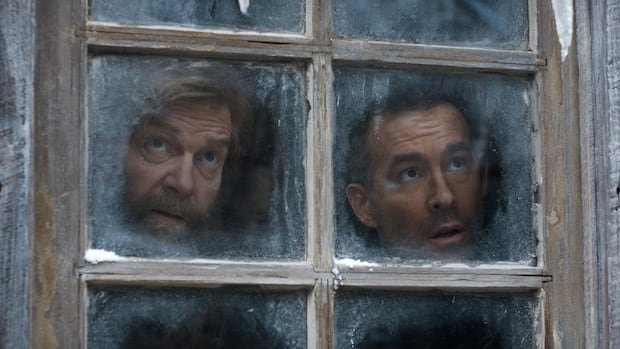

In a reflection of human nature, “Mayday” portrays the journey of an American serviceman coming to terms with the humanity of a Soviet soldier during the Cold War era. The film challenges the initial assumption that individuals from different backgrounds are fundamentally different.
The plot unfolds with aging ex-KGB agent Nikolai rescuing U.S. navy pilot Troy in Soviet territory, leading to a series of events that question motives and loyalties. Nikolai’s unexpected altruistic behavior towards Troy challenges stereotypes, highlighting the complexity of human nature beyond nationalities.
“Mayday” successfully blends action and comedy, showcasing the dynamic between Branagh’s charismatic ex-KGB agent and Reynolds’ role as the witty sidekick. The film strikes a balance between humor and action, steering clear of clichés often associated with similar genres.
The cinematography in “Mayday” is notable for its deliberate pacing and focus on character interactions, contrasting with the fast-paced editing common in modern films. This approach enhances the storytelling, emphasizing the emotional depth of the characters.
While “Mayday” fits into the category of ’80s nostalgia films, it stands out for its nuanced portrayal of American and Russian characters. The movie challenges traditional propaganda narratives by presenting a more balanced perspective on both sides, reflecting on the complexities of historical conflicts.
Overall, “Mayday” prompts viewers to reconsider preconceived notions about enemies and allies, emphasizing the universal aspects of humanity that transcend political divides. The film’s subtle exploration of moral ambiguity adds depth to the narrative, making it a thought-provoking addition to mainstream cinema.