
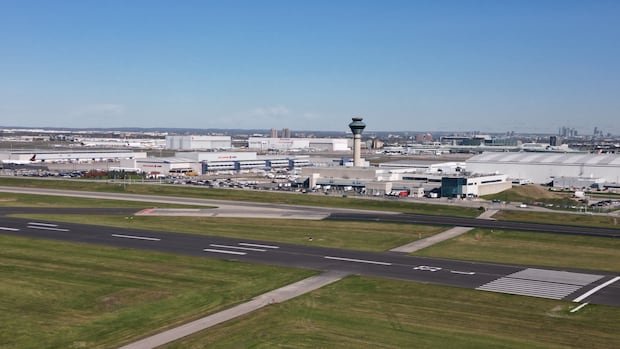

Prime Minister Mark Carney announced on Tuesday his intention to privatize the operations of Canada’s major airports located in Toronto, Montreal, Calgary, and Vancouver. He unveiled this proposal during a government-led investment summit in Toronto, aiming to retain federal government ownership of the airport land and assets while transferring the responsibility of managing these airports to private investors. Carney highlighted that this move would enable Ottawa to redirect funds from the operational expenses of major airports towards supporting smaller regional airports, potentially leading to reduced costs for travelers at those locations.
Under Carney’s plan, private investors would be granted the opportunity to oversee the management of airports through fixed lease periods, while Transport Canada would continue to regulate and supervise the operations. Karen Hennessey, a partner at Gowling WLG’s Ottawa office, suggested that implementing Carney’s proposal would likely necessitate legislative amendments. She explained that the envisioned model would involve a concession agreement resembling a lease, with the government stipulating requirements related to service standards, safety, costs for passengers, and employee management within the agreement.
Hennessey emphasized that the concession holder would seek clarity on their investment obligations and the regulatory framework. She noted that reaching a mutually beneficial agreement could take between six to nine months if both parties are motivated, although negotiations could also extend beyond this timeframe. Hennessey stressed that establishing a sound operational structure is paramount, indicating that immediate progress might be less critical than ensuring a well-structured arrangement.
Privately operated airports are uncommon in North America but more prevalent in other parts of the world. A study reported in the Journal of Air Traffic Management revealed that 51% of the busiest airports globally in 2018 had some form of private sector involvement. Europe exhibited the highest private participation at 43%, followed by Asia and the Pacific region at 26%.
Carney highlighted that Canadian pension plans have investments in foreign airports and expressed his desire to leverage this expertise domestically. Notably, the Australian Competition and Consumer Commission scrutinized the impact of airport privatization in Australia, noting potential price hikes for passengers as privatized airports evolve into local monopolies. Despite the likelihood of increased costs due to infrastructure investments, passengers generally reported satisfaction with the services provided.
Regarding the sentiments of Canadian airport authorities on privatization, the Canadian Airports Council adopted a cautious approach, emphasizing openness to investment discussions aligning with growth objectives and affordability for Canadian travelers. Opposition parties, including the NDP and Bloc Québécois, strongly opposed Carney’s privatization plan, citing concerns about heightened expenses for travelers and potential negative impacts on public infrastructure and employment.
Previous efforts to privatize Canadian airports, initiated during former prime minister Justin Trudeau’s tenure, involved studies and proposals to sell long-term leases to private investors, aiming to generate revenue. However, feedback on these initiatives was mixed, deterring the government from proceeding with the reforms, and ultimately, in 2018, the decision was made not to divest Canadian airports.