
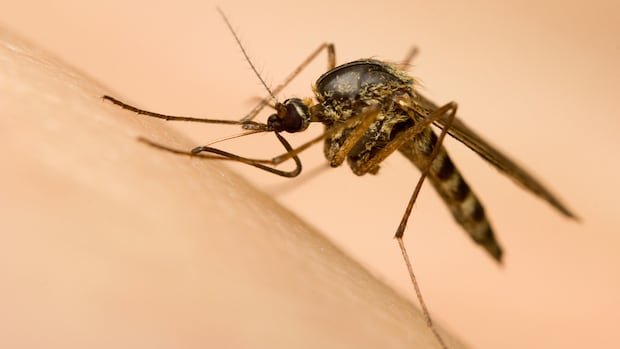

This summer, many prairie cities experienced a surge in mosquito populations, leading to a shortage of bug spray in stores across Manitoba, Saskatchewan, and Alberta. Data from the City of Edmonton revealed a significant increase in mosquitoes, with numbers 15 times higher in July compared to the previous year. Peter Daly, a technologist at the City of Edmonton, noted that although these numbers were not record-breaking, they were notably higher than in recent summers, impacting public perception.
Similarly, Saskatoon and Winnipeg also reported elevated mosquito numbers compared to the previous year. In southern Ontario, experts attributed the mosquito boom to the record rainfall experienced in certain regions, creating ideal breeding conditions for the Ochlerotatus trivittatus species. Fiona Hunter, a professor at Brock University, explained that the species thrives in areas with standing water, such as flooded fields and poorly drained spots, which were abundant due to the excessive rainfall.
The persistent biting behavior of the Ochlerotatus trivittatus species has led to increased human encounters, contributing to the perception of a severe mosquito season. The heavy rainfall in southern and southwestern Ontario triggered the hatching of dormant mosquito eggs, further exacerbating the situation. As temperatures drop, mosquito populations are expected to decline, with colder weather causing mosquitoes to die off. Reports from Alberta indicated a significant decrease in mosquito numbers following a cold spell.
Despite a warm fall in Edmonton, mosquito populations of the dominant local species, Aedes vexans, have started to decrease. However, a potential resurgence of mosquitoes is predicted as temperatures rise back to 20°C or higher in the coming week, although not reaching the levels experienced in central Canada.