
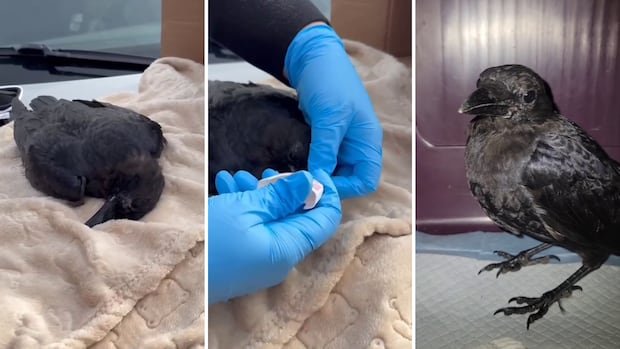

An organization dedicated to animal welfare in Prince George, B.C., has been treating crows with nasal naloxone after suspected exposure to toxic substances found in the downtown area. The Good Caws Crow Rescue Society (GCCRS) has shared videos of their volunteers administering nasal naloxone to unresponsive crows, with the birds later seen alert and able to fly again.
According to Dayna Slater from GCCRS, the crows in question are located in an area known for illicit drug use, leading to concerns about their well-being. They have observed a significant increase in suspected drug overdoses among the crows this year, with symptoms including closed eyes, slowed heartbeat, and brown liquid foam from their beaks. While some crows have unfortunately not survived, most have been successfully released after recovering within a day.
Dr. Kaitlyn Liukaitis from Birchwood Veterinary Clinic, who has treated some of the affected crows, confirmed that the symptoms align with toxic drug overdose. She noted that the use of naloxone to reverse these symptoms is a common veterinary practice for various animals.
The rise in drug toxicity in British Columbia has prompted warnings across cities, including Prince George, where overdose calls have tripled, leading to a constant presence of emergency sirens downtown. As harm reduction measures face backlash, outreach groups emphasize the need for safe indoor spaces for drug use to prevent harm to both humans and animals.
Collaborating with harm reduction groups and utilizing expired naloxone kits, GCCRS aims to address the issue of crows being exposed to toxic substances left in outdoor garbage. Slater stressed that the unintentional harm to the crows reflects broader societal challenges and suggested using covered garbage cans to prevent bird access to hazardous materials.
The situation underscores the interconnectedness between human activities and wildlife, highlighting the need for responsible waste disposal practices to protect vulnerable species like crows.