
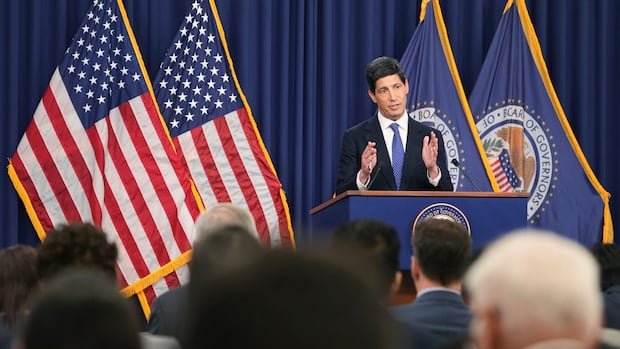

The U.S. Federal Reserve has decided to increase its benchmark interest rate, marking the first hike since 2023. This move aims to tackle persistent high inflation, with indications that another rate increase could happen later this year.
The quarter-point raise brings the Fed’s key rate to approximately 3.9 per cent, potentially leading to higher borrowing expenses for American mortgages, auto loans, and credit cards. This adjustment comes at a time when Americans are already facing challenges due to elevated costs for essentials like groceries, gas, and housing. The issue of affordability has become a central theme in the upcoming midterm elections scheduled in seven weeks.
In its latest projections, the Fed also hinted at a second rate hike later this year, projecting a rate of 4.1 per cent. Fed Chair Kevin Warsh, appointed by U.S. President Donald Trump, emphasized the economy’s acceleration since the bank’s decision to maintain rates in late July. Warsh highlighted that inflation has persistently exceeded the Fed’s two per cent target, showing no signs of abating.
According to Warsh, the decision to increase rates was driven by the need to address high and prolonged inflation levels. The Fed’s policymakers unanimously supported the hike, emphasizing that it would aid in achieving the two per cent inflation goal promptly.
Furthermore, concerns over escalating gas prices due to tensions between the U.S. and Iran influenced the Fed’s decision to support rate hikes. Warsh, who assumed leadership at the central bank in May, has been vocal about the Fed’s commitment to controlling inflation, aligning policy decisions with data trends.
The rate hike signifies a shift in Warsh’s stance, as he previously suggested lowering the key rate, in line with Trump’s advocacy for reduced borrowing costs. Despite past speculation, Warsh clarified his independence as Fed chair during his nomination process and affirmed the bank’s dedication to addressing inflationary pressures.
The ongoing disruptions from the Iran conflict, leading to a notable increase in gas prices, pose a threat to broader inflation levels. Recent inflation data showed core prices rising slightly in August, excluding food and energy costs.
Despite concerns over inflation, retail sales surged in August, indicating sustained consumer spending levels. This trend suggests that current interest rates are not significantly impeding economic activity to curb inflation.
While the U.S. Federal Reserve opted for a rate hike, economists believe that Canada may not face similar pressure to raise rates soon. The Bank of Canada and the U.S. Federal Reserve often adjust interest rates in tandem due to shared economic challenges. However, Canada’s inflation rates, although elevated, are comparatively lower than those in the U.S., indicating less urgency for rate adjustments in the near future.