
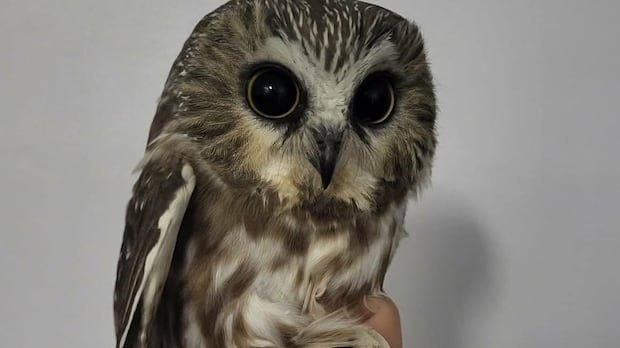

A significant number of owls migrating through northern British Columbia has kept the Mugaha Marsh Banding Station researchers extremely busy. This migration event, with numbers not seen in years, has astounded Jeannine Randall, a bird biologist at the Mackenzie Nature Observatory. Typically, the station catches about 100 owls during the season, but this year, they have already trapped 266, setting a new record.
The sudden surge in owl numbers caused an unexpected challenge: a shortage of the specialized tracking bands required for monitoring the birds. Due to the overwhelming demand, particularly for the larger-sized bands needed for saw-whet owls, the station faced difficulties as these bands were on back-order from the bird banding office.
While seeking assistance from other organizations, it became apparent that the owl influx was a widespread occurrence, leading to band shortages at multiple stations. Randall attributes the spike in owl numbers to the abundance of their prey, mainly small rodents like mice, deer mice, and voles.
Despite the positive trend at Mackenzie, Rémi Torrenta from Birds Canada cautioned that many owl populations in the province have been declining over the past 25 years. While some species, such as barred owls, show stability or growth, the overall trend is downward, including for northern saw-whet owls.
Torrenta explained that the current high owl population is likely part of a well-documented four-year cycle. This cycle involves a surge in owl numbers followed by a crash in the rodent population the subsequent year, forcing owls to migrate south in search of food, known as a mass eruption.
To monitor these patterns, Birds Canada coordinates the Nocturnal Owl Survey, a citizen science initiative that relies on volunteers nationwide to track owl populations each spring. These programs provide essential data for understanding owl numbers and migration trends across Canada.
Randall emphasized the importance of the Mackenzie Nature Observatory banding project in contributing to broader scientific research, offering vital insights into owl populations and migration routes. Notably, the station recently recaptured an owl banded in Victoria in 2024, shedding light on the species’ travel behaviors.