
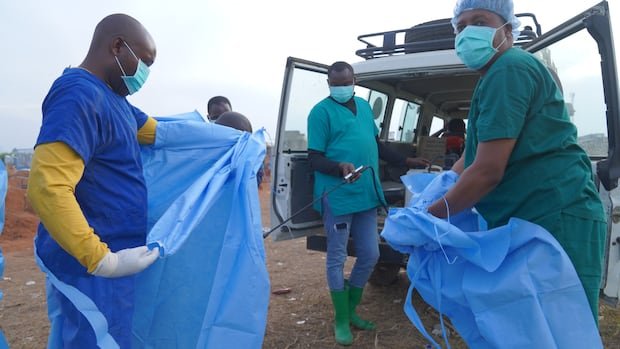

More than 2,500 individuals have lost their lives in the Ebola crisis in the Democratic Republic of Congo, with the virus rapidly spreading across an area larger than France, according to Julien Harneis, the senior United Nations Ebola coordinator. Harneis, speaking from Bunia in northeastern Congo via video call, emphasized the urgent need for additional assistance as the current funding is expected to run out within weeks.
Local health workers in the region are facing hostility and fear from the community affected by the outbreak, leading to attacks on these workers who are also falling ill and succumbing to the disease.
The recent tragic milestone coincides with the dispatch of a batch of vaccines to combat a different strain of Ebola in the D.R.C. The country requested these doses from the global Ebola vaccine stockpile last week. The allocated vaccine, Ervebo, is designed to prevent the Zaire Ebola virus strain and 20,000 doses out of the 70,000 distributed will be utilized in a late-stage trial to assess its effectiveness against the current Bundibugyo virus.
The World Health Organization has highlighted the necessity of clinical trials to determine if Ervebo can provide protection against the Bundibugyo virus in humans.
The current outbreak, caused by the Bundibugyo species of Ebola, has become the largest in the country’s history in terms of case numbers, surpassing the previous 2018-2020 outbreak. This Ebola strain lacks approved vaccines or treatments, exacerbating the severity of the situation.
Harneis expressed grave concerns about the escalating crisis, stating that the epidemic is rapidly expanding in an area larger than France, outpacing the response efforts. The region’s three-decade-long conflict has further complicated the situation, leading to significant humanitarian needs.
The challenges in combating the outbreak are compounded by the attacks on health workers and frontline responders, with ambulances being vandalized and personnel facing threats from angry individuals fueled by fear and misinformation.
Despite ongoing trials for a vaccine, the unavailability of a ready vaccine poses a significant risk of the outbreak spreading beyond the country’s borders, especially given the central location of Congo in Africa.
A total of 160 healthcare workers have contracted Ebola, with 43 fatalities reported. The violence and mistrust towards healthcare workers have hindered response efforts, with numerous attacks recorded in the past six months, resulting in fatalities among the healthcare workforce.
Moreover, the reduction in aid funding and logistical challenges, such as disrupted banking services due to halted commercial flights, have further hampered the ability of humanitarian organizations to effectively address the crisis.